A conversation between our experts with a content manager at a growing D2C brand last year. They had just invested in an AI writing platform. Output had tripled. The content calendar was fully booked three months ahead. Surprise showed on her face at first. Half a year passed before the pieces started coming down, one by one, without noise. Traffic slipping - down a third - kicked things off slowly. People walking away from emails more often added weight. Then came the blow: top posts, once leading, now buried beneath thinner content from rivals who barely tried. The AI had not failed them. Their strategy had.
They had used technology to solve a volume problem when their actual problem was quality. And no amount of AI-powered content marketing fixes a quality problem unless humans are making the decisions that matter. That is the conversation most businesses are not having yet. This article is about what the successful ones have figured out instead.
Why Content Marketing Has Fundamentally Changed
Five years ago, publishing consistently was enough to build organic visibility. Today it is the entry requirement, not the competitive advantage.
These days, search engines can tell which content actually serves people instead of chasing word counts. Because they prioritise usefulness, sites built only around popular terms lose ground fast. On social apps, what spreads isn’t just visible stuff - it’s what sparks reactions naturally. When posts feel forced, users notice right away. People now spot the difference between being cared about and being targeted. Real connection shows. Everything else fades. They are the ones whose content consistently answers real questions better than anyone else in their category.
A well-built AI content marketing strategy does not change that goal. It changes how efficiently you pursue it by removing the operational bottlenecks that prevent good content from being produced at the pace modern marketing demands.
What AI Does Genuinely Well
Let us be precise here, because vague enthusiasm about AI capability creates the exact misalignment that causes content programmes to fail.
AI content generation for SEO excels at four specific things: analysing search intent across large keyword sets, identifying structural patterns in top-ranking content, generating first-draft frameworks that editors can work from, and processing performance data to surface optimisation opportunities.
Spending half a day on repetitive tasks feels normal - until it isn’t. Suddenly, what used to take twelve gruelling hours shrinks down to just two, freeing up the rest of that stretch for thinking deeply about what makes content click. One person gains back nearly an entire workweek each month, simply because effort is shifted from grinding steps to shaping ideas.
That is the honest value of AI in a content workflow. Not authorship. Infrastructure.
Why Human Creativity Still Matters
Whenever we review content, here’s what goes through our mind - would someone stumble on these exact thoughts elsewhere? When the reply comes up empty, out come the edits, even if every keyword fits just right. A machine might nail structure, yet still miss the mark without a real voice behind it. Sharp formatting means little when nothing truly sticks. What counts are lives beyond algorithms, tucked into lines only people can write.
Fast drafts built around keywords? That’s where an AI blog writing agent shines, beating any person on speed alone. Yet after three years deep in one field, only humans gather those sharp insights that no machine pulls from thin air. Linking thoughts nobody saw as related - that spark misses when code does the typing. Trust grows differently. Readers return because someone wrote with weight behind their words, something you earn, never generate.
Truth lives in details, not false claims. Real skill shows when someone dares to say what others avoid. Standing firm matters more than repeating common thoughts. Machines can mimic words, but they cannot mean them. People notice who truly cares. Brands ignoring this keep losing attention, slowly fading without realising why.
What Genuine Human and AI Collaboration Looks Like
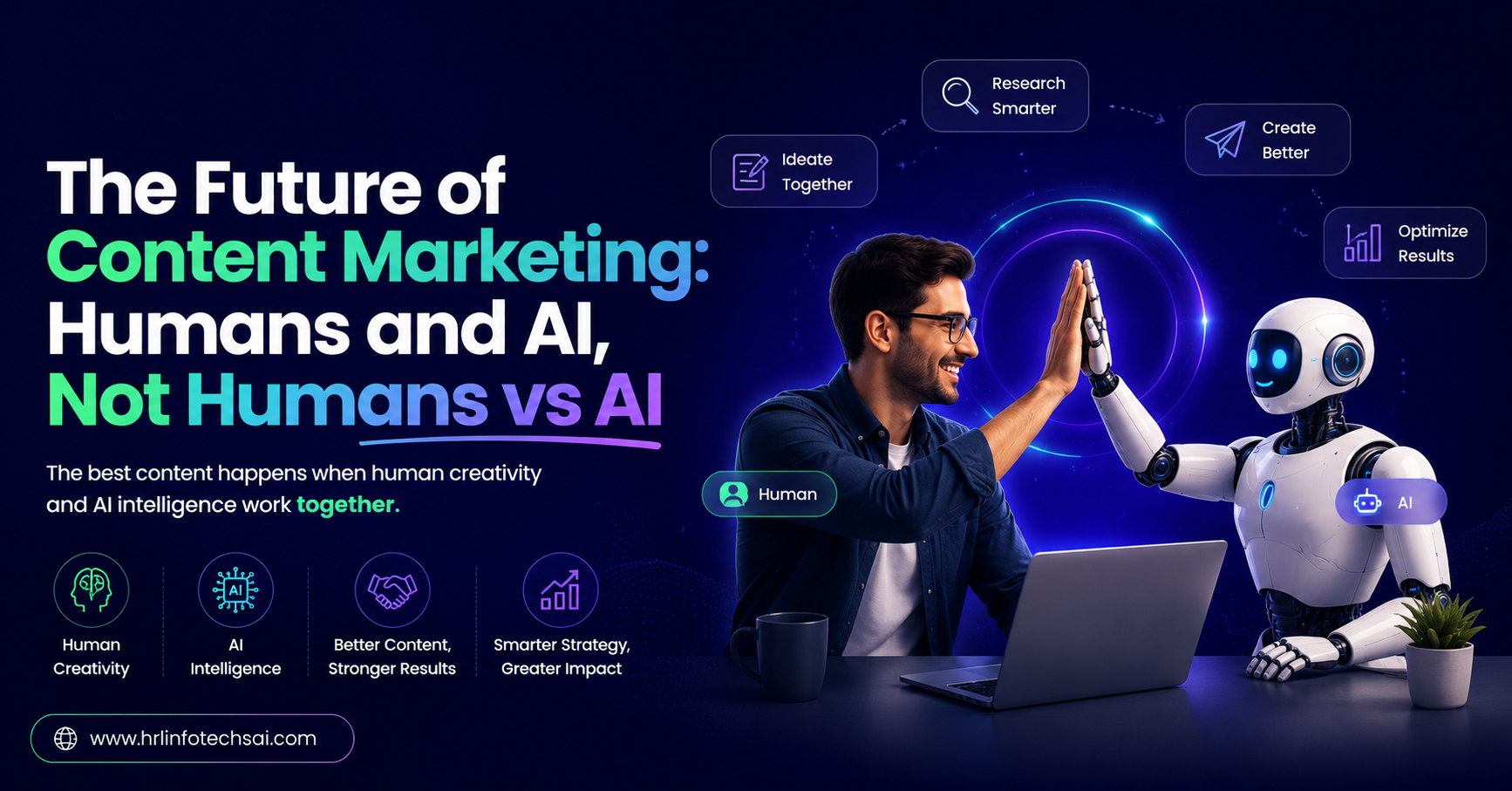
The phrase human and AI collaboration in marketing has become so overused that it has lost most of its meaning. So let me describe what it actually looks like inside a content workflow that performs.
Out of repeated questions in customer chats - ones nobody really answers - a topic takes shape, spotted first by a person paying attention. Search patterns around that idea get mapped by machines, pulling apart what people actually want when they type those words, then shaping a rough skeleton from top-ranking pages. This draft structure lands back with the human, who shapes its direction: how it stands apart, which real moment or number gives it weight, and where it pushes the reader to land when done reading.
AI blog writing tools then accelerate the drafting process within that framework. A human editor shapes the voice, sharpens the argument, cuts everything generic, and adds the two or three specific sentences that make the piece genuinely worth reading.
That workflow is faster than traditional content production. It produces better output than pure AI generation. And it scales without the gradual erosion of quality that eventually destroys content programmes built on automation alone.
AI Blogging and the SEO Quality Signal
AI blogging for businesses has created a paradox. Now, anyone can create tons of content, so the average quality across industries has climbed fast. Search spots are crowded now - way more material fights for attention compared to just a few years back.
The brands breaking through that noise are not doing so by publishing more. They are doing so by publishing content that demonstrates genuine expertise more clearly than their competitors.
Content marketing automation supports that goal by handling the operational layer: scheduling and distribution. Most of what fills the web moves like clockwork, guided by systems that post, share, and track, yet real distinction comes only when people steer the vision. Machines manage timing, delivery, data flow - freeing minds to shape voice, depth, originality. If software chooses topics, angles, and messages instead, output blends into background noise. Fitting in means being ignored.
Scaling Content Without Sacrificing Quality
The pressure to produce more content with flat budgets is real, and automated blog writing software genuinely solves the volume side of that equation. Output increases, the calendar fills, and stakeholders see activity.
What it does not solve without deliberate human oversight is the compounding side. Every mediocre article published under a brand's name marginally reduces the trust readers place in that brand's content. That erosion is invisible in the short term and significant over twelve to eighteen months.
The brands scaling content successfully right now have built workflows where AI handles speed and consistency while humans control quality and direction. That combination produces content that grows more valuable over time rather than diluting the brand's authority through sheer volume.
Optimisation Is Where Most Brands Leave Growth Behind
AI content optimisation is the most underutilised capability in most content programmes and consistently the highest-return investment available.
Most brands sit on archives of hundreds of articles that are losing traffic due to freshness decay, ranking on page two with minor improvements needed to break into the top three, or targeting search intent that has shifted since the piece was originally written. Systematically identifying and updating those articles almost always outperforms investing the same budget in new content production.
AI makes that process operationally realistic at scale. It surfaces the specific opportunities inside an existing archive that would take a human team weeks to identify manually, and it does so continuously, so the content programme improves through iteration rather than only through new publication.
Conclusion
Future leaders in content won’t rise because they spend the most on AI. Instead, success comes from balance - machines take tasks they’re truly suited for. Humans stay in charge when ideas need originality, deep knowledge, or bold choices. Trust grows where tech supports people, not replaces them. Real connection forms slowly, through careful decisions made by real minds. Fast output matters less than smart oversight. The edge goes to those who know what should never be automated.
That combination does not just produce better content. It builds a compounding asset that earns more trust, more visibility, and more commercial value with every piece published.
At HRL Infotechs AI, helping brands build that exact model is what we do, combining intelligent automation with genuine editorial expertise to create content that performs in search, earns reader loyalty, and builds brand authority that grows stronger over time. We have seen what happens when strategy replaces guesswork and when human judgment leads every creative decision AI accelerates. The brands that invest in that model do not just grow faster; they build something competitors cannot easily copy, because real expertise compounded over time is the one advantage that does not depreciate.